Building the EAC Buyer Market that Matters
Paper One made the case that the EAC fight is a false choice: 3,000+ plants and 288 months require SCMs AND deep decarbonization, and both need EACs to scale. This paper is about the market that funds both: one market, many price points, the way LEED built Silver, Gold, and Platinum.
Where each region’s prices sit
One dot per compliance carbon price; the rule spans each region’s range, the tick marks its median. Ranges overlap widely, but medians don’t: Europe’s is roughly eight times Asia-Pacific’s.
No instrument anywhere reaches the $175+ per tonne a deep decarbonization producer needs to break even, and every regional median sits far below it.
Affordability of construction - for roads, bridges, housing, and other infrastructure - will likely depress pricing in compliance markets for some time to come. So, how to we 'grow the pie', add more buyers, and stretch voluntary budgets further?
The near term question is: can industry deliver whole decarbonization of cement and concrete at an “all in” EAC price somewhere between $52 and $80, where the western markets sit?
It can. But only if we stop treating the EAC as one product.
Stack EACs like materials stack in the truck
In Part I we explained why a Deep Decarbonization EAC wouldn’t want to compete with SCM EACs: in a market where they are mutually exclusive, the SCM certificate wins every time because they are just factually cheaper to produce and need a lower subsidy to scale. If EAC registries calls them both “an EAC,” a buyer with a budget will always take the cheaper one — and the deep producer never clears.
So split the instrument and stack within a single unit of inventory. One EAC for SCMs. One EAC for deep decarbonization. A third, if the market wants it, for total zero pathways.
This gets a buyer a functionally LOWER cost per unit of inventory while scaling BOTH solution categories we need to get the system to zero. The SCM EAC funds the plants that scale the cheapest abatement available. The deep decarbonization EAC funds the ACM, CCU, and CCS projects that no volume of SCMs will ever reach. Neither undercuts the other, because they are no longer selling the same thing.
Stacked EACs and the weighted average band they can blend into
CTC's estimated trading ranges, $ per tonne CO₂e — the shaded band is where western carbon already prices
CTC estimates. The larger the SCM market gets, the closer that instrument trades to $60.
Since we need both EACs, blending or stacking these EACs together would help find the sweet spot. Which brings us to the rule that makes stacking honest.
Rules of the Road
CTC has written about stacking and about the difference between good and bad stacking. Splitting the EAC instrument makes that distinction critically important. If a buyer can blend an SCM tonne with a deep decarbonization tonne, the obvious objection follows: what stops them from stacking the cheap one ten times over and claiming complete decarbonization of their inventory?
There must be rules. In LEED, you cannot buy your way to Platinum with bike racks. Points come from different systems because a building is a system, and no quantity of one lever substitutes for another.

EACs should stack ONLY when: the materials generating them could physically be blended in one ready mix truck — and when there is an ASTM standard, or accepted performance test, that technically verifies the maximum volume of that EAC’s underlying material in a mix. If the mix could be poured, the certificates can stack. If it could not, they cannot.
- 1Define EAC classes that are consistent with a pourable mix.
- 2No stacking EACs from the same class twice.
- 3An ASTM standard or protocol to technically verify a maximum participation in a blend.
This is not a theoretical constraint. It describes what plants already do. LC3 is a blend. 1T cements are a blend. Two and three materials working together in a single concrete solution is not unusual today — it is becoming the norm, and the standards bodies have kept up.
A Technical Verification test to determine the maximum portion of the stack that any material can claim is the reason stacking can be trusted at all.
The Technical Verification test demonstrates that a novel SCM or deep decarbonization solution displaces a portion of clinker or conventional cement with requisite commercial performance. It protects against greenwashing by Buyers: no volume of SCM certificates adds up to a near-zero claim, because no truck full of SCMs gets to near zero. It also protects price premiums for deep decarb producers - Buyers will have to purchase their class of EACs to claim full decarbonization of inventory. Today’s buyers with a net-zero target have a near-term pathway to a full-loaded EAC cost under $80. A new set of buyers with a partial or selective decarbonization target have access to a wider range of EACs at differentiated price points.
So what does this market look like in practice?
What it costs a buyer
How the stack works
Start with one cubic metre of ordinary 30 MPa concrete, the workhorse of most buildings. Made the conventional way, it carries about 420 kg of CO₂e. The goal is near zero: 26 kg or less, the GCCA’s top rating (AA). That leaves 394 kg to remove.
No single technology removes all 394 kg at a price buyers will pay, so multiple solutions are used and each comes with its own EAC. Note - for simplicity here we provide sample EAC prices per tonne of CO₂e avoided.
The full climb
GWP remaining after each step — kg CO₂e/m³, 30 MPa, off a 420 kg conventional mix
Note: EAC prices are illustrative ranges, shown per tonne of CO₂e avoided to keep the stack math simple. EAC protocols may issue EACs per unit of material produced, with the avoided carbon calculated from that material’s EPD against a baseline. GWP values follow the GCCA Global Ratings for Concrete (30 MPa, cradle-to-gate A1–A3 net GWP); the 420 kg starting point is a conservative deemed value for unrated concrete.
Step 1: Use less cement (Novel SCMs). High Novel SCMs mixes can take concrete from 420 kg to 199 kg (GCCA base to C rating), cutting its footprint roughly in half. We assume producers of a Novel SCM EAC need $20 - $40 per tonne avoided to scale quickly.
Step 2: Change the chemistry (deep decarbonization). CCU into additional binders and cement replacements can take the mix from 199 kg to 83 kg (GCCA C - A rating), an 80% reduction from where we started. They are scarcer and more expensive to produce, so we assume producers need $120 - $180 to get first plants to pencil.
Step 3: Decarbonize the clinker (the last mile). Some conventional Cement with a capital ‘C’ will likely still be needed. CCS at the cement kiln or new, electrified cements without process emissions address that remaining CO₂. That covers the final 57 kg, from 83 kg to 26 kg (GCCA AA). These technologies need the highest price EAC to justify project economics on the supply side, but they anchor the net zero blend.
The blended basket could clear the full climb at about $95 per tonne, roughly what European industry already pays for compliance carbon under the EU ETS.
All three steps together cost $30.90–$43.97 to take one cubic metre from 420 kg to 26 kg. Spread across the 394 kg removed, that works out to $78–$112 per tonne, the blended price. It sits well below the price of the deep steps because more than half the tonnes come from the cheapest one.
A buyer who covered all 394 kg with last-mile certificates alone, at $200–$250 per tonne, would pay $78.80–$98.50/m³. The stack reaches the same claim for 55–61% less. And at the midpoint of our ranges, the blended price is about $95 per tonne, roughly what European industry already pays for compliance carbon under the EU ETS. A near-zero claim costs about the same as the carbon price Europe’s heavy industry already pays.
Near zero is not zero. The last 26 kg would need carbon removals or future technology, which is why GCCA calls its top rating “near zero.”
Build a Ladder - Grow the Market
What do most buyers care about? While hyperscalers now buy EACs against their whole inventory, most folks who touch concrete and want to go green are focused on a specific building or project. How does the EAC and stacking help get them there?
Imagine a certification scheme aligned with GCCA’s rating system where EACs helped to bring individual projects, building portfolios, and infrastructure development into the offtake market.
Many of the companies that develop or invest in these projects have decarbonization goals, but cannot commit on a forward, multi-year basis to purchasing fixed volumes of material or associated EACs. What they can do is align how they build to a decarbonization standard and send a clear signal as a wider market where they are headed.
The LEED lesson
LEED understood this with its Silver through Platinum certification scheme. To use our Tesla Roadster example, Platinum would be like an EV Ferrari that only a few motivated developers can afford. Silver Certified would be like the Chevy Bolt - we’re moving to electric but not taking a big hit on budget.
LEED’s lower certifications created an entry model that got a wide set of developers, investors, and governments a mandate threshold or target at a price they could approve immediately, with just a bit of extra thought and planning. The full rating scheme gave everyone above that entry point a ladder and higher targets to climb toward. LEED gave a broader ecosystem of asset investors and regulators a legible way to compare one project or developer to another in a way that “we retired some certificates” never will.
When LEED launched in 2000, early green building projects primarily focused on achieving baseline Certified or Silver designations. Over the last two decades, maturing architectural standards and corporate sustainability goals pushed the global market toward higher tiers, establishing Gold as the most frequent rank. Today, 45.6% of all LEED-certified buildings globally have reached the premium Gold or Platinum levels.
As building and infrastructure developers access low emission materials at the project and portfolio level, a similar structure can be achieved through the EAC market.
Three example project certifications, and the EACs that get you there
Bar height is the certification a project claims; the segments are the EAC classes retired to reach it
Now take that $30.90–$43.97 / m3 of concrete premium we estimated above for a full EAC ‘stack’ - how does that translate into a premium on a construction budget? On an average building construction budget, where concrete is 12% of hard cost (not including labor) it would look like this:
What each certification actually costs
Cumulative certificate cost to reach each project certification, 30 MPa concrete
Note: Shares are calculated as certificate cost per m³ ÷ ready-mix price ($190/m³) × concrete’s share of hard cost (12%, excluding labor). Both are CTC assumptions; the shares scale directly with them.
Novel SCMs and deeper decarbonization solutions bring other project costs related to testing, risk, and education. But on a commodity premium, these are figure ranges we can absorb. The key is educating a wide market that EACs can be a part of how they build.
That is not a novel theory. It is how markets have been grown for decades, and it is the part of the LEED playbook the EAC market has not copied yet.
Two things get mixed together in this debate and need separating. The certification is a claim at the building or project level — what the owner declares about the structure. The EAC is the instrument that gets you there, retired against the concrete actually poured. LEED rated buildings, not light fixtures. The ladder that matters is the project-level ladder, and EACs are how a project climbs it.
Launching with the right ladder grows the green market - that's the lesson of LEED
The number of buyers early in the cement & concrete EAC market matters just as much as the price they pay. Transactions have to start flowing before anything else works: a market with real volume produces price discovery, registry infrastructure, procurement language, and a track record that financiers can underwrite.
Why the ladder builds the market
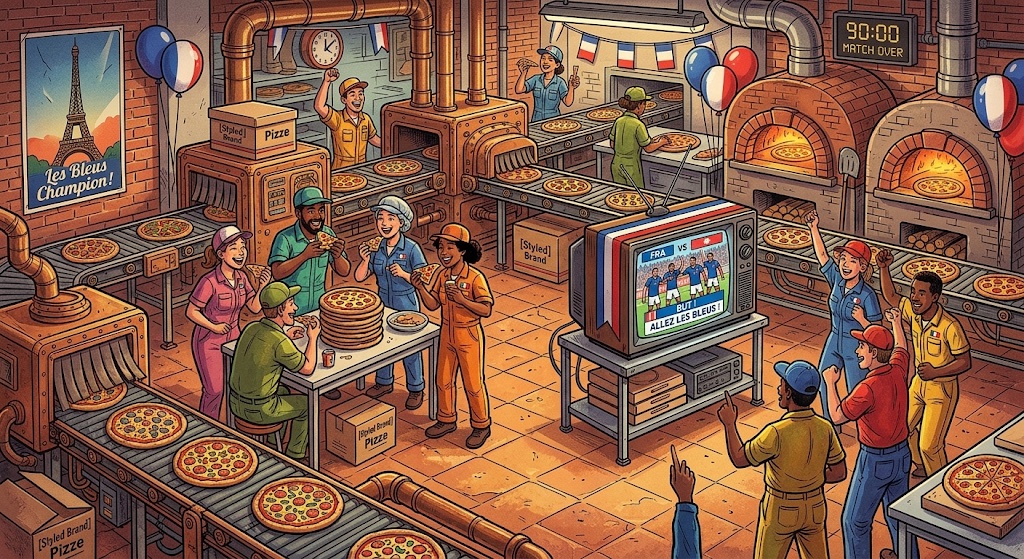
Without a ladder, the green premium concentrates: a few showcase projects pay the full near-zero price, everyone else pays nothing, and the demand signal reaching deep decarbonization producers is too thin and lumpy to finance against. That is fighting over the single slice of pizza conundrum.
Buys its way to a 53% reduction for the cost of a nicer floor finish.
Steps from 53% to 66% on an interim target it already published.
Buys near zero, and pays the premium that makes FOAK bankable.
With a ladder, every project buys a rung. Ten thousand buyers climbing from the entry rung retire more real CO₂e than ten near-zero purists. And the scarce top rungs aggregate that dispersed demand into the multi-year, creditworthy purchase agreements that make first-of-a-kind CCS and CCU projects bankable.
The DD Camp gets its premium, funded by a market the SCM Camp built. Both camps win, and they win because of each other.
The proposal
- 1
Denominate EACs in verified tonnes of CO₂e reduction against a regional reference baseline, issued and retired through a registry, per the RMI/GMA book-and-claim framework.
- 2
Stamp every certificate with the verified decarbonization percentage of the production that generated it, measured against the regional reference baseline.
- 3
Enforce basket integrity at retirement. The stack behind any claim must map to a mix that could exist in one ready mix truck. No 10×-ing shallow levers. No all-SCM paths to near zero.
- 4
Let unrated demand in at the bottom. No EPD means a conservative deemed baseline at the bottom band, and a cheap, immediate first rung to buy.
- 5
Publish the curve and let it price depth. Abundance keeps the entry rungs cheap; scarcity pays the FOAK premium at the top.
The technologies already know how to share a truck. The certificates should too.
Then nobody has to fight over a single slice. The kitchen gets built, and everyone eats.
Continue exploring
Appendix: Data & Assumptions
Concrete, 30 MPa specified cylinder strength, cradle-to-gate A1–A3 net GWP, expressed as percent decarbonization vs. the 420 kg CO₂e/m³ reference baseline: ≥53% (≤199 kg CO₂e/m³) · ≥66% (≤141 kg) · ≥80% (≤83 kg) · ≥94% / near zero (≤26 kg). Classes pair with strength because higher-strength concrete needs more cement.
Deemed baseline for unrated concrete = 420 kg CO₂e/m³ (typical straight-OPC 30 MPa mix; final deemed values set per region). Certificate prices ($30/$60/$90/$175 per t CO₂e for the ≥53%/≥66%/≥80%/≥94% classes) are illustrative placeholders expressing the scarcity curve.
Ladder costs: full climb 0.394 t × blended prices = $25.31/m³ vs. $68.95 near-zero-only; 53%-start climb 0.173 t = $18.68/m³ vs. $30.28 near-zero-only. Blended per-tonne average on the full climb: $25.31 ÷ 0.394 t = $64.24/t; Advanced $15.33 ÷ 0.337 t = $45.49/t; Certified $6.63 ÷ 0.221 t = $30.00/t. Share-of-construction figures assume ready mix at $190/m³ and the concrete package at 12% of total construction cost. The 53%-start climb averages $108/t, above the ETS band, because its cheapest rung has already been achieved physically.
DD EAC breakeven ($140–$340/t) and profitable ($180–$430/t) ranges use carbon dioxide removal credits as a proxy, a category that includes mineralization. EU ETS: €82.63/t spot August 2026; analyst forecasts of €79.97 average for 2026 and €89.13 for 2027, converted at €1 = $1.17 (≈$94–97/t). Figure 2 (Paper One) scenario steps are illustrative midpoints for discussion.
Terminology follows the RMI/GMA Book and Claim for Cement and Concrete framework. Sources: RMI/GMA Book and Claim for Cement and Concrete · CTC Concrete Ideas series.
Go Deeper
This paper draws on CTC's published research. Each topic above is explored in depth:
This is the second of two papers on EAC market design. Paper One makes the case that the fight itself is the problem.